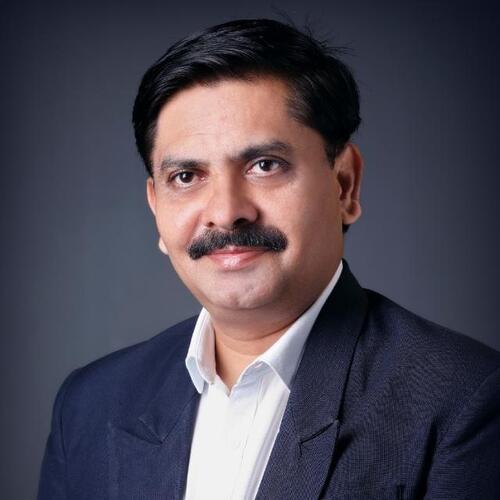
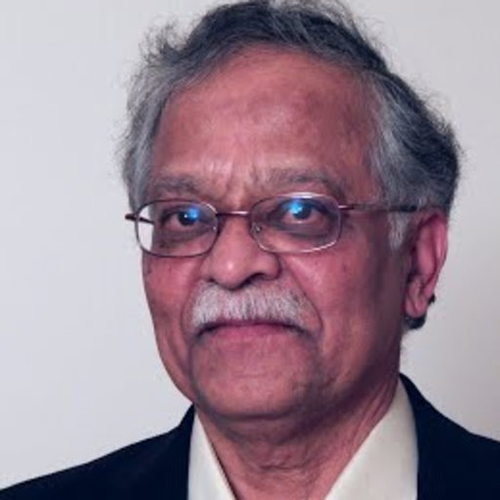
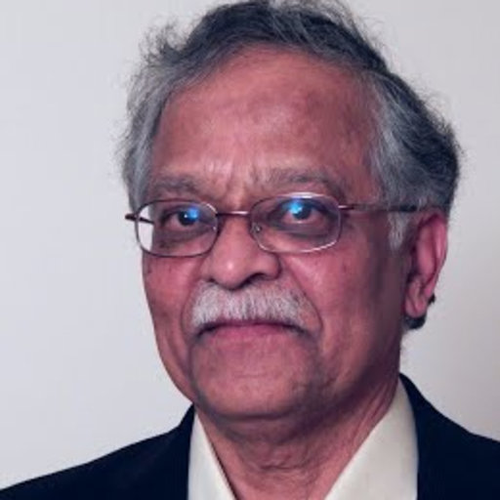
FKSTA
Former Vice-Chancellor
Gulbarga University, Gulbarga
BLDE University, Vijaypur






Part I
1.1 Early Glimpses:
The Government of India has envisioned that by 2047 CE,
India will be a developed country - a Viksit Bharat. The vision is based
on the seven objectives - zero poverty, 100% good quality school
education, access to high quality, affordable and comprehensive health-care,
100% skilled labour, 70% of women in economic activity and farmers making our
country the food basket of the world [1,2]. Related
to this vision is the Atmanirbhar
Bharat campaign, that is, an independent and self-reliant India, that is
determined by the five key aspects: Economy, Infrastructure, System,
Vibrant Demography and Demand. Higher Education as an implicit
constituent should form an integral component in Atmanirbhar Bharat and
therefore, positioning it in the
vision is no less important and must get its due weightage. It may be of
interest to know how Higher Education, which is imparted to pupils after the 12th
standard, began to be provided for the young Indians during the British Rule.
Throughout the ancient centuries and up to the reign of Moghul empires, there
were traditional learning centers, Agraharas, under the patronage of the
respective kingdoms [3]. Given
the longevity of the ancient Indian civilization composed of the diverse
cultures, education of its people has always constituted an integral component
in learning. There used to be centers (one may say Gurukuls) or parishads
where young people were lodged and boarded for studies which lasted for a
number of years. They were taught Vedas, Upanishads and other disciplines
- medicine, law, grammar, literature, art, accountancy, astronomy (including
mathematics), astrology, agriculture, archery, theology, philosophy, logic, state-craft
and so on. Around circa 6th century BCE, Takshashila
as a university was established near Indus River (in today’s Pakistan) that
attracted students from the Indian sub-continent and remote places. It is said that
rigorous training was part of its curriculum which also included Bodhisattva,
a philosophy of Buddhism. Following its destruction after nearly 900
years, a similar university called Nalanda (in today’s Bihar) was
established circa 5th CE which survived up to the 12th
century until it also perished. This university turned out to be a Buddhist
center of learning and attracted a large number of young people from as far as
China and perhaps beyond. The students received instructions in Mahayana
Buddhism along with Jainism and other subjects as cited above. The
university is believed to have been constructed with specious infrastructure
like class rooms, library, meditation halls, boarding and lodgings for
thousands of students. While a strong intellectual but friendly bond between
the teacher and the pupil was forged, at the same time, the pupil’s participation
in public discussion was encouraged. History says Vallabhi in Kathiawad
and Kanchi in the southern India and Nadia in Bengal were other contemporary
institutes but not much is known about them. The Moghul Rulers in the mediaeval
periods established madrasahs (the equivalent of colleges) with the medium
of instruction being Arabic and they were dedicated to higher learning,
functioning alongside the traditional Hindu institutions. However, most of them
have not survived over a period of time. When British Rulers replaced Moghuls, they
realized and desired that English education would be more useful than native education
in running civil administration across the Indian sub-continent. One of the
social reformists Raja Ram Mohan Roy (1722-1833) of Bengal, who despised Hindu traditional
practices, helped the East India Company to achieve this goal. Colleges were
created one after another; the Hindu college, for example, was founded in 1817.
While English, European literature and science were taught to the native youths,
the white men of European descent were educated to become missionaries. The
B.A. and M.A. degrees were awarded to the successful candidates by the colleges;
however, for a Ph.D. degree, the youths had to go to Europe. The rich parents
sent their sons to study at British universities; the scholarship scheme and
royal patronage supported talented but poor ones who also pursued studies in
the U.K and elsewhere in Europe. It must be noted that initially Christian
missionaries too established schools followed by a number of colleges at
different places. They had dual objectives: firstly, to impart teachings of Christian
religion; secondly, to teach European science and literature. Those native
Indians educated in Western science and proficient in English were employed in
government jobs. All these initiatives
were taken in the first half of the 19th century and it was also
desired that college education must also be imparted in medical science,
engineering and law which were indispensable for consolidating British
administration. As the education enterprise progressed, it was realized that
the colleges had to be brought under a university system as in England, and
therefore, three universities were established, namely, the University of
Calcutta, University of Bombay and University of Madras, all around 1857-58.
Based on the model of London University, these universities were administratively
structured comprising a Chancellor, a Vice-Chancellor and a Senate. However, the
universities simply became affiliating bodies for colleges under their
jurisdiction and were regulated with regard to admissions and conduct of exams.
There was no plan to transitioning to ‘a constituent system’ from ‘an affiliation
system’. As a result, the affiliation system restricted freedom to teachers and
administrators in running the colleges. The first Education Commission of 1882
recommended, among others, to expand the scope of Higher Education by creating
more colleges and allowing private societies to establish schools and colleges
as a measure of reducing financial burden on the British Government. By
1901-02, the number of colleges swelled to 179 of which 126 were founded in
British India and the remaining in Burma and Ceylon (which were under the
British Rule). Finally, the Universities Act of 1904 came into effect which
laid down elaborate regulations, lending tighter bureaucratic control to the
British Government. During these years, a wave of protest against British Rule
had been brewing mainly led by the Indian National Congress founded in 1885.
Interestingly, the European education in Indian colleges stirred up the political
consciousness of the people to support freedom movements against the
British Rule itself!! After a long gap, some more universities were established
towards the end of the 19th century and in the beginning of the 20th
century: Punjab, Allahabad, Dacca, Patna, Banaras, Aligarh, Nagpur and Rangoon
Universities were established. It was Pt Madan Mohan Malaviya
(1861-1946) who founded Banaras Hindu University in 1917 and served it as its
third Vice-Chancellor. The establishment of universities in the southern India
began in earnest. Thanks to the vision and initiation of His Highness Nalwadi
Krishnaraja Wadiyar IV (1884-1940), the ruler of the Kingdom of Mysore and its Dewan
Sir M.Vishwesharaia, the University of Mysore was founded in 1916. His Highness
Krishnaraja Wadiyar was its first Chancellor. It became the first university in
the Madras Presidency and subsequently also the first university in Karnataka
State, the second being Karnatak University (1949). Other universities
established include Andhra University (1926), Annamalai University (1929) and
University of Travancore (1937, later called University of Kerala). It is of
interest to note that the first College of Civil Engineering in 1847 was
founded in Roorkee, Uttarakhand, by Lieutenant-Governor James
Thomason, with the sole purpose of training people for survey work and building
canals across the Ganges river. After his death, the college was renamed
Thomason College of Civil Engineering in 1854 and later in 1949, it was renamed
University of Roorkee, and in 2001, it was renamed again Indian Institute of
Technology-Roorkee (IIT-R). It is one of the highly rated institutions for
engineering education and research.
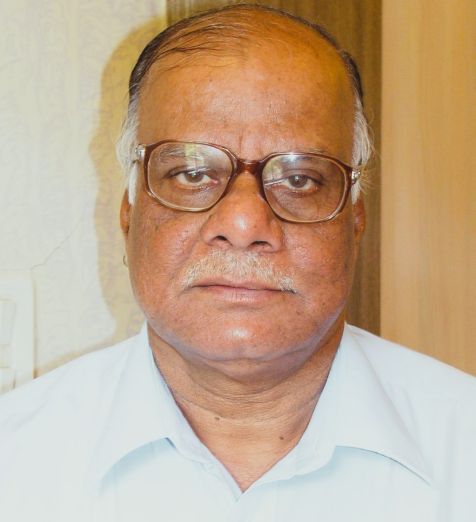
FKSTA
Former Vice-Chancellor
Gulbarga University, Gulbarga
BLDE University, Vijaypur
FKSTA
Adjunct Professor, Department of Physics
Karnatak University, Dharwad